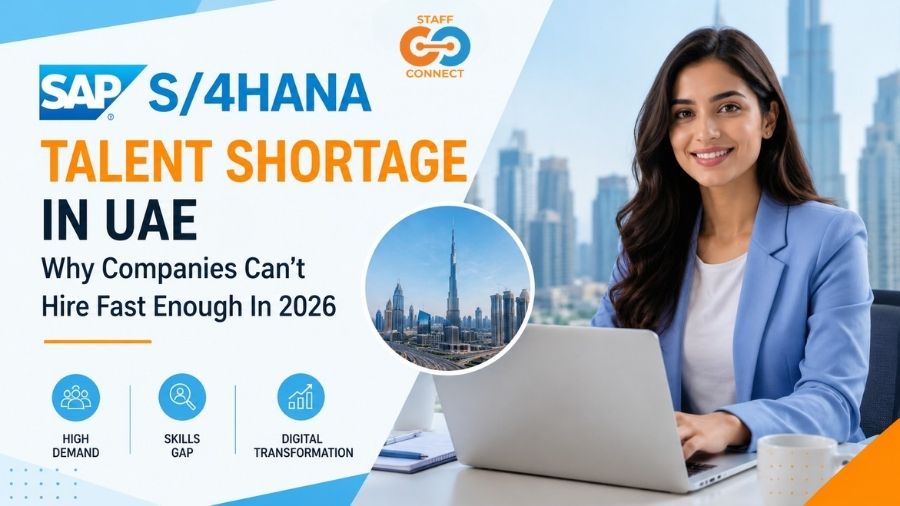

The SAP S/4HANA talent shortage in the UAE is driven by a looming 2027 deadline to migrate from ECC, an influx of large-scale technical transformation projects in the Gulf, and a scarcity of candidates with advanced hybrid skills. Corporations are struggling to hire quickly enough because of structural gaps, rigid hiring procedures, and inflated salary expectations.
The UAE is recently experiencing one of the most difficult economic booms in its history. Driven by national visions to make a digital-first economy, companies in Dubai and Abu Dhabi are racing to advance their technology. At the center of this huge change is SAP S/4HANA, the current generation company resource planning system that assists companies in handling everything from finance to complicated supply chains.
However, corporations in the country are operating into a primary roadblock: they are facing a severe SAP talent shortage. Companies are prepared to spend millions on their technology upgrades, but they just can’t find the proficient engineers, architects, and functional advisors needed to operate these projects.
In 2026, the supply gap for specialized enterprise technology experts has reached a boiling point. Locating the appropriate talent is no longer only a human resources problem; it has become a strategic bottleneck that can delay multi-million-dollar company transformations.
Table of Contents
The Perfect Storm – What is Driving the Massive Demand?

The current crisis in SAP S/4HANA recruitment UAE is the consequence of a number of primary factors coming together at the precise same time. It isn’t only about companies wanting new software; it is about absolute functional need.
1. The Looming Deadline for SAP Legacy Systems
For years, companies have depended on older SAP versions, like SAP ECC. However, SAP’s official timeline to wind down support for these older main systems has forced a huge wave of migrations. Corporations that delayed their upgrades are now all rushing to finish their transition to S/4HANA simultaneously.
2. Aggressive Digital Transformation Goals
Successful corporate expansion today is no longer only a technological difficulty; it is a profoundly organizational one that needs strong data environments and extremely integrated company platforms. UAE companies are extremely ambitious.
Whether it is a huge retail group in Dubai or a logistics giant in Abu Dhabi, corporations are changing toward insight-driven implementation to expect market deviations and optimize their workflows. They require S/4HANA to work as the advanced data base for these modern capabilities.
3. An Unprecedented Economic Boom
Backed by real estate expansion, tourism, and huge foreign investments, new corporations are setting up offices in the United Arab Emirates every single day. Established local companies are growing their footprints internationally. To handle this huge scale across boundary lines, a refined ERP system like SAP S/4HANA is the super standard.
Why Traditional Hiring Methods are Failing

When a UAE corporation decides to go through an SAP implementation UAE project, the common corporate reaction is to post a job description online and wait for CVs to roll in. In 2026, this passive system is practically a guarantee for failure.
As highlighted in broader local technology labor reports, specialized company positions need remarkable time to fill, usually taking almost three times longer to recruit in comparison to typical software developers. The reasons for the prolonged timelines come down to three main factors –
1. The Experience Paradox – S/4HANA needs a basically various mindset than older SAP systems. It depends on a quick, in-memory database and features a thoroughly redeveloped user interface. Corporations want advisors who already have two or three full-cycle S/4HANA executions. Because the technology is relatively new, the pool of those who have actually completed this successfully is extremely small.
2. The Need for Business Translators – An amazing SAP consultant can’t only be a digital coder. They should know local tax rules, local supply chain adherence, and remarkable industry workflows. Locating an expert who bridges both profound digital knowledge and local business reality is highly rare.
3. Intense Global Competition – The shortage isn’t isolated to the Middle East. Europe, North America, and Asian locations are facing the same shortage. A skilled SAP consultant sitting in Europe or India can effortlessly select between projects globally, making local recruitment extremely competitive.
The Shift from Degrees to Verified Skills

The nature of hiring for modern company tech platforms has transformed. In international labor markets, more than 70% of hiring managers have shifted concentration toward a skills-first methodology. Corporations are realizing that a conventional four-year computer science degree doesn’t automatically mean a candidate understands how to configure a live SAP S/4HANA system.
Rather, the industry has turned highly toward specialized ecosystems and micro-credentials-concentrated, short-form expert certifications given directly by technology experts like SAP to examine particular hands-on competencies.
The Skills Disruption –
The fast speed of technical growth means that an expert’s digital knowledge set faces quick disturbance within a five-year window. For UAE corporations, this means checking a candidate’s constant certification record and real-world project history is far more useful than examining where they went to university.
How Specialized Agencies Bridge the Gap

Because common internal HR teams are rarely furnished with the good network needed to source these rare profiles, forward-thinking companies are transforming their methods. They are highly dependent on specialized SAP staffing Dubai collaborations to protect the right experts.
A committed workforce partner, like Staff Connect, modifies the dynamics of the appointing procedure. Rather than beginning a talent search from scratch when a job opens up, specialized recruitment partners sustain active, living pools of pre-vetted talent internationally.
| Feature | Internal HR Recruitment | Specialized Agency |
| Sourcing Network | Inbound job applications & local portals | International, forceful headhunting pipelines |
| Technical Vetting | Typical HR screens | Profound digital evaluation of SAP project history |
| Time-to-Hire | High risk of prolonged delays | Quick deployment of the contract |
| Market Intelligence | Restricted to internal corporate bands | Real-time visibility into competitive local salaries |
By connecting with a professional company, businesses seeking to fill SAP consultant jobs UAE can sidestep the conventional friction points of recruitment. Instead of sorting through hundreds of unqualified resumes, leadership groups are presented with extremely targeted, project-ready professionals who can establish themselves on day one.
Strategic Playbook for UAE Companies in 2026

If your company is currently planning or implementing an SAP change, you can’t afford to let hiring delays stall your improvement. To win the challenge for talent, leadership groups must implement a three-part playbook –
1. Focus on Sustainable Human Resource Management
Enticing top talent in the United Arab Emirates demands an extremely detailed Employee Value Proposition that focuses on career development, constant digital learning prospects, and complete employee well-being.
If a candidate feels that your company delivers a supportive atmosphere where they can secure and develop their career long-term, they are far more likely to sign your offer letter over a competitors’.
2. Adopt a Flexible Object vs. Subject Talent Philosophy
Companies should decide how they conceptualize talent. You can take an object system, paying attention to observable, customized skills like direct knowledge in particular SAP modules.
Optionally, you can adjust a fluid subject system, identifying that high-potential tech experts can accept and grow specialized knowledge quickly through robust internal onboarding, community support, and structured leadership schedules. Mixing both systems permits you to hire for the main capability and train for particular niche configurations.
3. Embrace Flexible Staff Augmentation Models
Don’t bind yourself exclusively to permanent, full-time hires. The finest SAP professionals frequently prefer working on a project-by-project agreement basis.
Using adaptable team augmentation through a firm permits you to scale your staff during crucial design and testing steps, and scale down seamlessly once the system goes live.
Conclusion
The SAP talent shortage in the United Arab Emirates is a structural reality of the 2026 business landscape. As company systems become the foundation’s core of advanced company strategies, the corporations that succeed will not be those with the biggest budgets, but those with the smartest talent methods.
By moving toward a skills-first appointing system, delivering sustainable career environments, and taking advantage of specialized ecosystem partners like Staff Connect, your company can protect the elite digital talent it requires to implement a smooth, on-time SAP S/4HANA journey.
