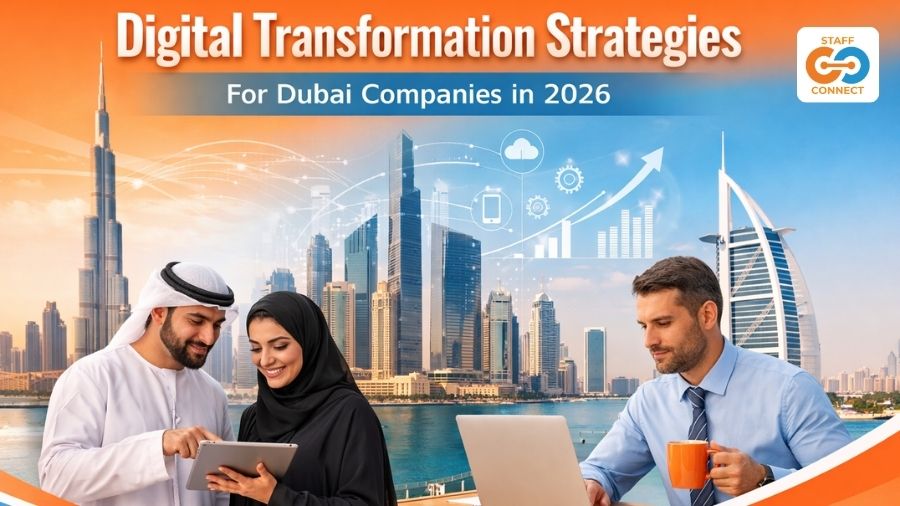

Developing Dubai as a global digital center has been made possible by ambitious government initiatives, including the UAE Digital Government Strategy 2026, along with the vision of creating a smart, sustainable city. Digital transformation is no longer just a strategic project for organizations operating in the region, but instead serves as their operating baseline for achieving success.
As we approach 2026, the emphasis moves away from simply applying new technologies towards enhancing and integrating advanced technological solutions into a business model. Advanced technologies include generative artificial intelligence, edge computing, and phygital experiences. Companies that do not adapt their core operating strategies are going to fall behind regarding efficiency, customer experience, and gaining a competitive advantage.
Table of Contents
The Four Pillars of the 2026 Digital Transformation Strategy
Digital transformation needs to be a total or all-encompassing strategy encompassing all areas of a business, from customer experience to back-end technology. One of the key components of digital transformation is an emphasis on Intelligence (AI) and Machine Learning (ML) to be utilized further in the future.
1. Strategic Pillar – AI at the Core, Not the Edge
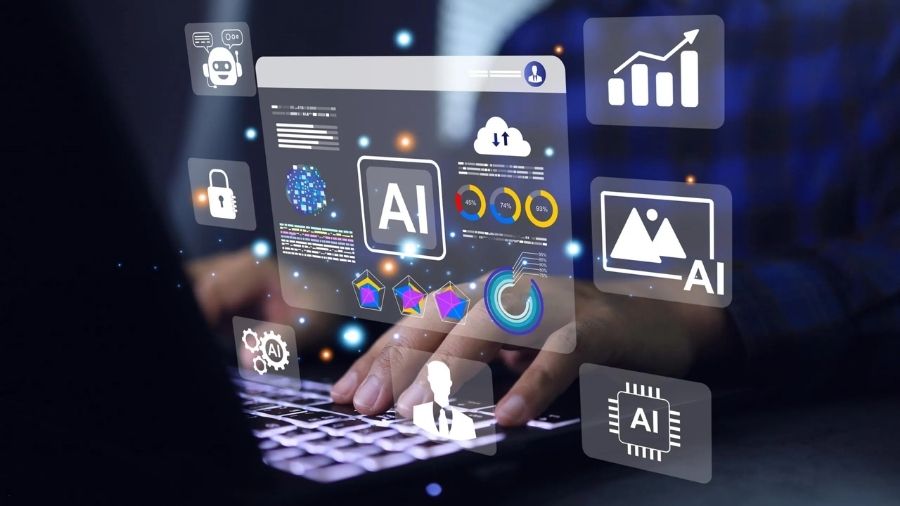
By 2026, the purpose of ML and AI will not only be for chatbots but also as a part of the company’s foundational operating system.
- Hyper-Automation and Generative AI – AI technology, such as hyper-automation and Generative AI, will enable enterprises to employ new machine-learning technologies in their core capabilities and ultimately reduce labour costs by automating entire tasks not usually completed by people. Companies will enable machines to handle complex transactions that have previously been performed by people.
- Data-Driven Decision Making – By using AI/ML to make data-driven decisions, businesses will be able to use real-time information to respond(timely) to market changes by providing better predictive market insights. Businesses will become more proactive than reactive in their decision-making processes.
- Strategy – Businesses must create an AI investment strategy to define and track progress based on agreed-upon metrics; i.e., improved forecast accuracy or additional revenues created by AI capabilities.
2. Technological Pillar – Cloud and Composable Architecture
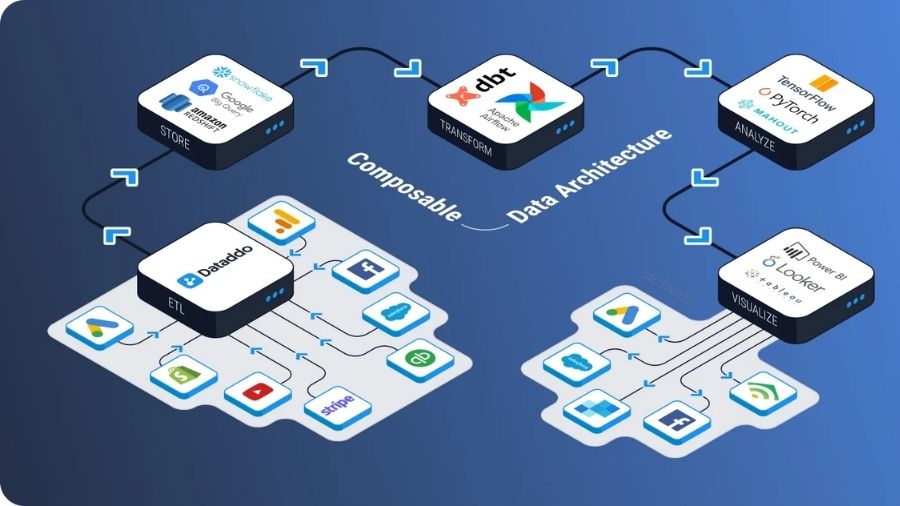
The technology infrastructure has to be very flexible and scalable to allow for rapid innovation – it is no longer possible to be restricted to siloed legacy systems with no flexibility.
A. Cloud Modernization (Multi-Cloud) – Spending in Public Cloud is increasing massively. Many businesses in Dubai are starting to adopt a Multi-Cloud strategy to take advantage of lower overall infrastructure cost, increased systems resilience, and to easily deploy new services to the Market. Most of these businesses still have many legacy applications that need to be modernized into Cloud-Native applications, using Microservices and Containerization.
B. Composable Enterprise – This is how companies can accelerate the development of business capabilities. The Composable Enterprise takes an existing IT System and breaks it down into individual Business Capabilities (via APIs) that can be easily consumed by other systems. For example, if you want to add a new payment gateway or create a new e-commerce capability, you can purchase and integrate pre-packaged modules in just a few days, reducing the amount of time it takes to get new capabilities to Market significantly.
C. Edge Computing – With the tremendous number of IoT devices becoming available to Smart Cities in Dubai, the amount of computing power needed to collect and analyze all of the data must be located as close as possible to the Data Source. By locating computing power at the edge, businesses can perform real-time analytics on Data rather than having to wait for the entire Dataset to be sent back to a central Cloud location.
3. Customer Pillar – Phygital Convergence and Experience Reinvention

Customer experience (CX) will become the biggest competitive differentiator by 2026, with hyper-personalised CX that incorporates both physical and digital interactions.
A. Phygital Experience – Using AR, VR, or IOT when creating experiences where customers can interact with products as if they are there.
- Retail Example – An augmented reality app can allow a person to visualise how a piece of furniture would look in the customer’s home.
- Real Estate Example – Global virtual reality tours of properties, combined with the ability to visit them, can provide properties to buyers who are not in the local area.
B. The Omnichannel Journey – The successful transformation to CX requires the same positive customer experience at every customer touchpoint (i.e., website, mobile app, social media, and physical store). Therefore, to understand a customer 360 degrees and create a seamless experience, the company must collect, analyse, and act upon the data received during the customer’s interaction with the company at each of the company’s touchpoints.
C. Digital Channels as Default – Businesses must consider digital channels (e.g., e-commerce, mobile apps, and self-service portals) as the primary source of revenue and customer engagement, rather than simply an additional option.
4. People Pillar – Upskilling and Change Management

The quality of technology depends on who will be able to use and support that technology. The human component is key to ensuring that this transformation can be sustained.
- Transforming the workforce – Organizations must close the skill gap through the mapping of the skill requirements for the future state to the measurable business outcome.
- Continuous Learning – By incorporating ‘personalized learning journeys’ within everyday operations, organizations can enable the workforce to remain resilient and relevant. Investing in creating a smart workforce using current staff is often a much more reasonable solution than hiring all of the new experts in a competitive labour market.
- Agile Culture – Organizations transforming digitally must create a sustainable cultural environment that promotes experimentation, accepts calculated risk, and rewards ongoing improvement. It is important for leaders to manage the organisation’s emotional change curve during the transformation process.
The Role of External Expertise in Dubai’s Digital Landscape

Despite existing as an additional forgone supplement to the business growth process, many companies lack not only their in-house capabilities regarding all four of these pillars (speed to market, etc.) but also the level of skill set needed to accomplish all four pillars at once. As such, it is essential that companies partner with a Digital Transformation Service Provider or IT Consulting Company to expedite their Digital Transformation journey.
1. IT Consulting Companies Dubai – Strategy and Roadmap
Conducting a strategic plan is the first stage of any significant transformation. There are a variety of IT Consulting Companies in Dubai that focus on developing strategic plans.
A. Alignment of Strategy – The IT Consulting Company ensures that any investment in technology is directly aligned with an organization’s business goals (e.g., increasing market share, improving profit margins, increasing customer satisfaction).
B. Legacy Modernization Roadmap – The IT Consulting Companies in Dubai provide clients with a roadmap for how to upgrade or replace their outdated, obsolete, and/or risky legacy systems. Legacy system modernization can be very challenging for an organization as it usually requires a migration of data to new systems, refactoring of applications, and ensuring that business operations continue without significant interruptions.
C. Selection of Technology – The IT Consulting Companies will assist clients in selecting the right cloud, AI, and Security vendors and technologies for their specific needs and budget. With expert assistance, the IT Consulting Company will help the client select the right Vendor and Technology, thereby saving time, avoiding costly mistakes, and streamlining their Digital Transformation journey.
2. IT Infrastructure Services Dubai – The Foundation
The process of putting digital transformation in place requires a strong modern base on which to build. To do this, providers of IT Infrastructure Services Dubai will develop and maintain that foundation for digital transformation through providing the following services.
- 1. Cloud migration and optimisation – The IT infrastructure service providers have expertise in the complicated and laborious process of transferring your data, application, and IT systems from your own internal servers to a cloud platform. They will also work to optimise your cloud platform in terms of cost and security.’
- 2. Network evolution – IT infrastructure service providers will also work towards evolving the overall network to support emerging technologies such as 5G, Internet of Things (IoT) devices, and edge computing. These new technologies will often require simpler, more automated, and more secure network architectures.
- 3. Cybersecurity and resilience – As the industry moves towards an increasingly digitalised society – digital transformation – it is critical to ensure that you have a solid, well-secured foundation upon which to build your digital transformation. Your infrastructure partners incorporate cybersecurity into every level of IT infrastructure, protecting your data and preventing threats from happening while meeting UAE regulatory requirements.
3. Managed IT Services Dubai – Execution and Reliability
Once strategy and infrastructure are established, ongoing and reliable proactive Management of the Infrastructure is vital to avoid system failure and provide clients with 24/7 uptime, as required by the continuous operation of Dubai’s Economy. This is where Managed IT Services Dubai comes into play.
- Proactive Monitoring and Maintenance – The benefit of utilizing Managed Service Providers (MSPs) is that they provide continuous monitoring and maintenance of networks, Servers, and applications. They utilize sophisticated software and tools to identify potential problems before they cause downtime.
- Cost Predictability – Managed IT Services Dubai offers fixed monthly pricing versus unpredictable emergency repair costs, allowing businesses to plan and budget for ongoing, quality IT support.
- Access to Expertise – As a small-to-mid-sized Enterprise, managed service providers (MSPs) provide immediate access to the same level of expert personnel who would normally be financially unable to hire them in-house. This team of specialists has the necessary skills for large-scale, transformative projects.
Conclusion
It is anticipated that by 2026, the ability for rapid integration, as well as speedy access to market share, will be beneficial for businesses that successfully execute on a strategy that focuses on Digital Transformation through Artificial Intelligence (AI), leveraging Data (Big Data, Data Analytics, and Data Science) across Composable Multi-Cloud Architecture (CMCA).
By focusing on an integrated strategy of digital transformation, businesses will also have the opportunity to be proactive in defining the digital future and securing their status as leading players within the Global Economy of Dubai.
